



Finding a stain or dark patch overhead can be easy to dismiss at first. However, mold on ceilings is often connected to excess moisture somewhere above or around the affected area.
In Orlando, high humidity, frequent rain, and heavy air-conditioning use can create the right conditions for moisture to collect in ceilings, attics, bathrooms, and HVAC areas. What looks like a small surface stain may therefore be a sign of a larger moisture issue.
Understanding the cause is the first step toward solving the problem correctly.
What Causes Ceiling Mold in Orlando Homes
Homeowners often ask what causes mold on ceiling surfaces when there is no obvious leak. In many cases, moisture is still the underlying issue, but it can come from several different sources.
Roof Leaks After Heavy Rain
Orlando’s heavy rain and storm activity can expose weak points in a roof. Damaged shingles, flashing, seals, or other roofing components may allow water to enter the attic and reach ceiling materials.
When this happens, mold on the ceiling after roof leak damage may develop around the visible water stain or in hidden areas above the drywall. Even after the ceiling appears dry, trapped moisture in insulation or framing can continue creating favorable conditions for mold growth.
Attic Humidity and Poor Ventilation
Not all ceiling moisture comes from a direct leak. Warm, humid air can become trapped in the attic when there is poor ventilation.
Over time, condensation and elevated humidity can affect insulation, roof decking, and ceiling materials. This is especially important in Florida homes, where outdoor humidity remains high for much of the year.
Improving airflow and controlling excess moisture can help prevent mold growth from returning after the affected area is addressed.
AC Drain Line Overflows and Duct Condensation
Air-conditioning systems can also contribute to ceiling mold in Orlando homes. A clogged drain line, overflowing drain pan, or condensation forming around ductwork can introduce moisture into areas that homeowners cannot easily see.
Because HVAC components often run above ceilings or through attic spaces, leaks may remain hidden until stains, bubbling paint, or dark spotting begin to appear below.
Bathroom and Kitchen Steam
Bathrooms and kitchens naturally generate moisture through showers, cooking, and hot water use.
Without adequate ventilation, steam can settle on cooler surfaces and create persistent dampness. This is one reason mold on bathroom ceiling surfaces often appears above showers, near exhaust fans, or in upper corners.
Using ventilation consistently can help reduce moisture, but recurring mold may indicate that the underlying humidity problem needs closer attention.
How to Tell If Ceiling Stains Are Mold
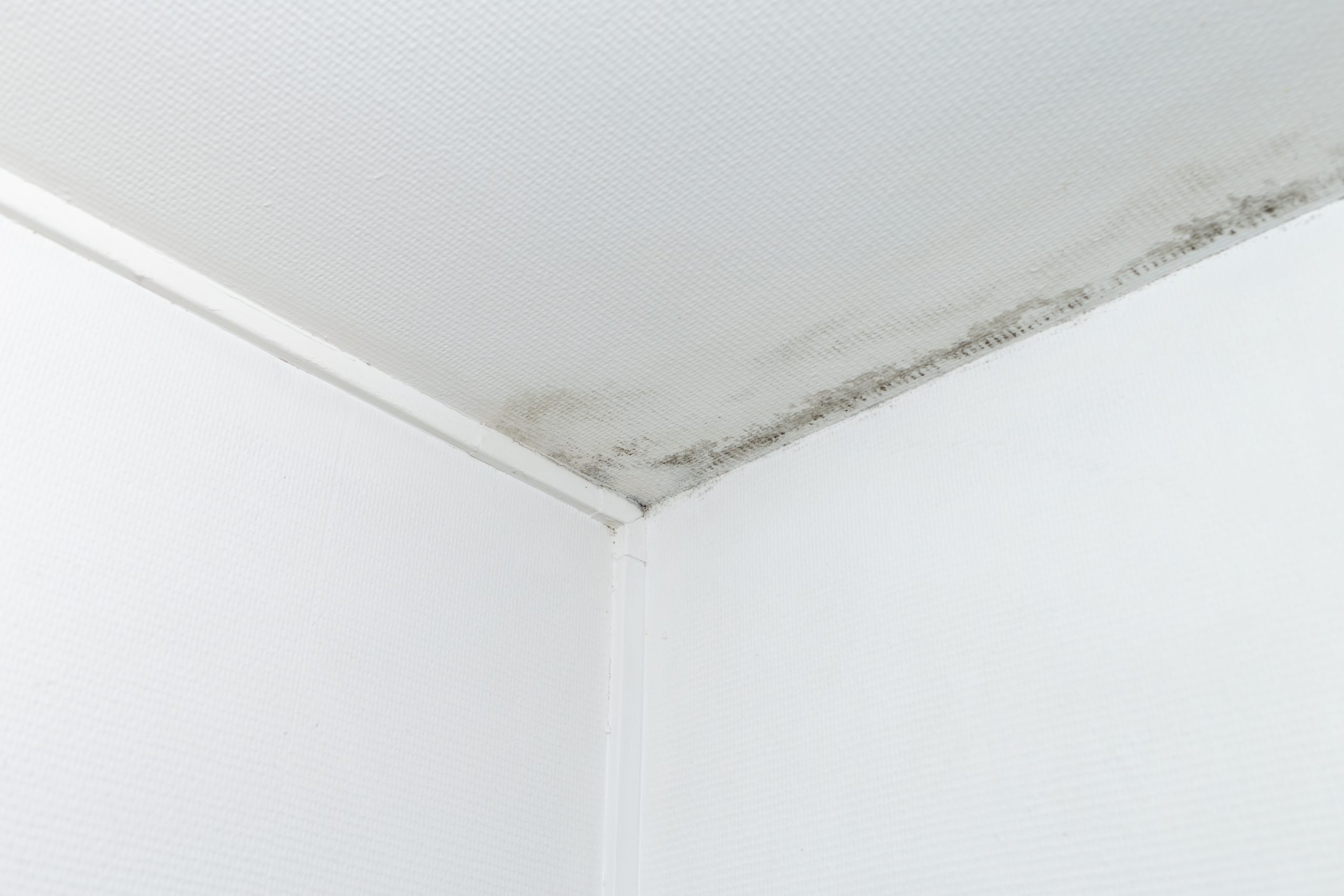
Not every ceiling stain is mold. Water damage can leave yellow, tan, or brown marks, while mold may appear as darker, irregular spotting.
When trying to understand how to tell if a ceiling stain is mold, homeowners should look beyond color alone.
Water Stains vs. Mold Growth
A water stain often appears as a flat ring or patch of discoloration. Mold growth may look more speckled, fuzzy, uneven, or clustered.
A persistent musty smell can also suggest an active moisture issue, particularly when combined with dark spots or recurring discoloration.
However, visual appearance alone cannot confirm the exact type of growth. If the source or severity is unclear, a professional inspection is the safer next step.
Sagging, Soft, or Bubbling Drywall
Changes in the ceiling material can be an important warning sign.
Drywall that feels soft, begins sagging, or develops bubbling paint may have absorbed moisture from hidden water leaks or condensation.
These changes can indicate that the problem extends above the visible surface and may involve insulation, framing, or other building materials.
Spreading Dark Spots Near Vents or Corners
Dark spotting that continues spreading near vents, corners, or exterior walls deserves attention.
Homeowners sometimes refer to any dark-colored growth as black mold on ceiling surfaces. However, color alone does not identify a specific mold species.
What matters most is determining why moisture is present and whether the affected area extends into hidden spaces.
Why Ceiling Mold Is Rarely Just a Surface Problem
Cleaning the visible area may improve its appearance temporarily, but ceiling mold often has a moisture source that needs to be corrected.
Hidden Growth in the Attic and Insulation
Mold can develop above drywall long before it becomes visible inside the room.
If moisture has reached attic insulation, framing, or roof decking, the affected area may be larger than the stain seen from below. This is why repeated cleaning without investigating the source often fails to solve recurring mold problems.
A complete assessment looks at both the visible area and the spaces connected to it.
Risks of Spreading Spores During DIY Cleanup
DIY cleaning can also create problems when the affected area is larger than expected.
Scrubbing, sanding, or removing contaminated drywall without containment can disturb spores and particles. In addition, surface cleaning does not address hidden moisture.
Professional ceiling mold removal focuses on controlling the work area, evaluating affected materials, and correcting the source of moisture rather than simply covering or wiping away the stain.
The Right Next Step: Inspection Before Removal
Before removing ceiling materials, it is important to determine where the moisture is coming from and how far the issue extends.
A professional mold inspection in Orlando can help identify visible signs of mold, moisture intrusion, humidity concerns, and areas where hidden growth may be present.
At Mold Remediation of Orlando, the inspection process may include visual assessment, moisture detection, and testing when appropriate.
The goal is to understand the full condition of the affected area before recommending remediation.
How Professionals Remove Ceiling Mold
Professional remediation typically involves more than cleaning the visible ceiling.
Containment and Material Removal
The first step may involve isolating the affected area to reduce the spread of dust, debris, and mold particles during removal.
Materials that are heavily contaminated or damaged by moisture may need to be removed. Other surfaces may be cleaned and treated depending on their condition.
Fixing the Moisture Source
Remediation will not be effective long term if the original moisture problem remains.
That may mean correcting a roof leak, clearing an AC drain line, repairing plumbing, improving attic airflow, or reducing excess indoor humidity.
Addressing the source helps reduce the chance of mold returning after cleanup.
Repair and Clearance Testing
Once affected materials have been removed and the area has been properly cleaned and dried, repairs can begin.
Professional mold remediation services may also include post-remediation or clearance testing when appropriate to evaluate conditions after the work is complete.
This process helps ensure that the project addresses more than just the visible surface.
Schedule Your Free Assessment Today
If you are seeing mold on ceilings, recurring stains, peeling paint, water damage, or musty smells, the next step should be identifying the source before the problem spreads.
Mold Remediation of Orlando helps homeowners evaluate moisture and mold concerns and determine the appropriate next steps based on the condition of the property.
Contact us today to schedule your free assessment and get a clearer understanding of what may be happening above your ceiling.
