


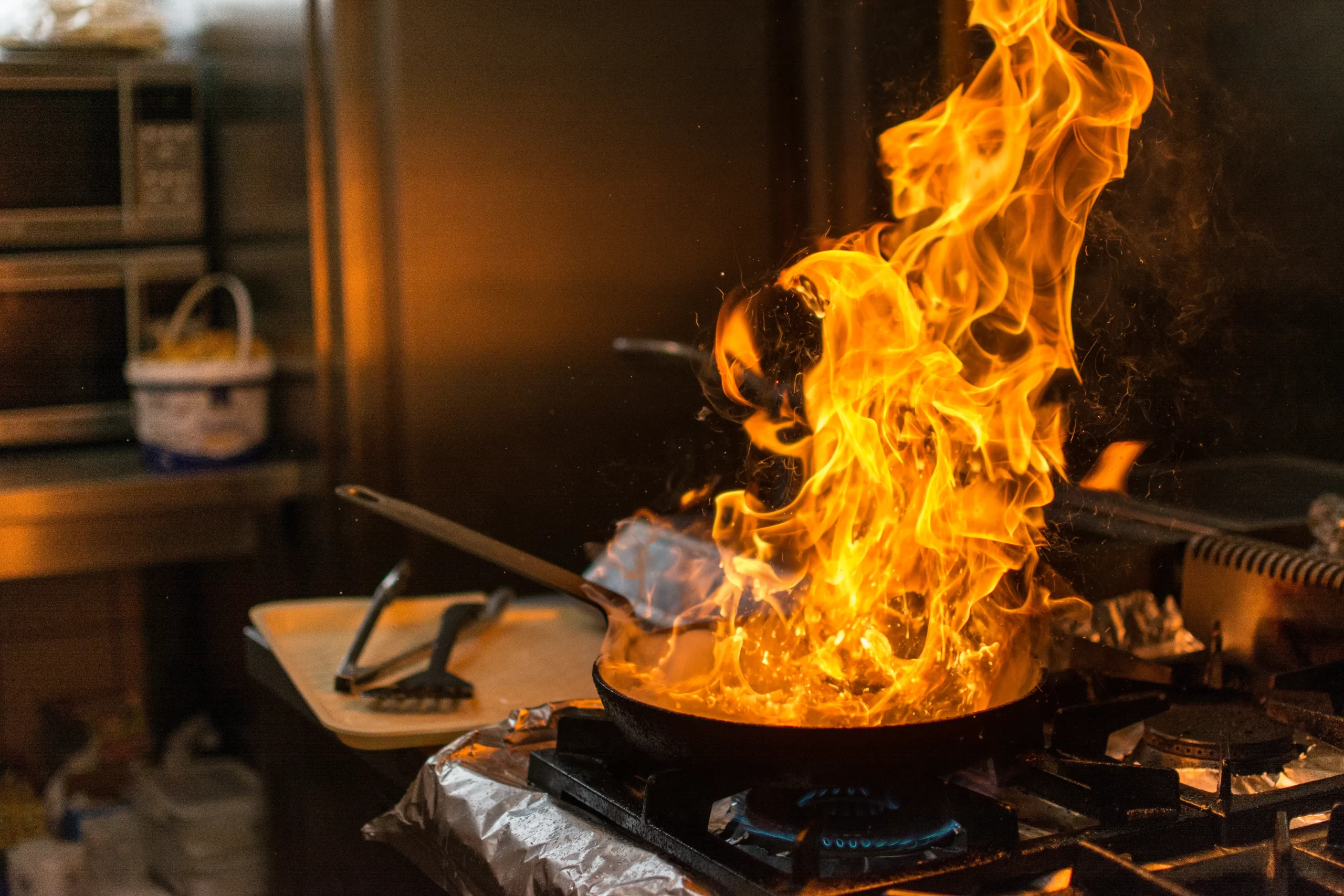
A kitchen fire is one of the most distressing events a homeowner can experience. Even if the flames were contained to a single pan and extinguished quickly, the aftermath is often more extensive than it appears. Beyond charred cabinets lies an invisible enemy: smoke.
The pungent, acrid scent of a fire permeates every corner of a home, clinging to fabrics and sinking into porous surfaces. While your first instinct may be to scrub the walls, achieving true air purification after a fire requires a specialized, scientific approach that goes beyond surface cleaning.
The Hidden Dangers of Lingering Smoke and Soot
When organic materials, proteins, and plastics burn during a kitchen fire, they release a complex cocktail of chemicals. This soot is a corrosive byproduct that can cause permanent staining and etching on appliances and countertops within hours.
Because smoke is pressurized by heat, it is driven into the smallest crevices. Kitchen fire smoke damage includes the deposition of microscopic particles that continue to off-gas VOCs (Volatile Organic Compounds) long after the fire is out. These particles are often smaller than 2.5 microns, allowing them to bypass the body’s natural filters and lodge deep within the lungs.
Why Opening Windows and Using Ceiling Fans Isn’t Enough
The most common DIY reaction to a smoky house is to “air it out.” While opening windows provides a temporary reprieve, it is rarely a long-term solution for several reasons:
- Lack of Filtration: Natural ventilation doesn’t remove embedded particles from upholstery or drywall.
- Particle Displacement: Fans can push soot higher into the air, spreading contamination to unaffected rooms.
- Settling: Without a professional air scrubber, you are simply moving the contamination around rather than removing it.
Professional equipment creates a “negative air” environment, ensuring contaminated air is pulled through high-efficiency filters rather than settling back onto your furniture.
How Smoke Particles Contaminate Your HVAC System
In the humid Florida climate, HVAC systems are constantly circulating air. If the unit was running during or shortly after a fire, it likely pulled smoke and soot into the return ducts. Once inside:
- Coating: Residue coats the interior lining and evaporator coils.
- Redistribution: Every time the AC kicks on, it sprays a fine mist of soot throughout the house.
- Persistence: This is a primary reason many struggle to remove the lingering smoke smell from Orlando properties. The source is hidden in the ductwork.
Comprehensive fire damage restoration must include a professional inspection of the ventilation system.
The Health Risks of Breathing Post-Fire Indoor Air
Living in a home with lingering smoke odor isn’t just unpleasant, it’s also a health hazard.
Short-Term Symptoms to Watch Out For
Immediately following a fire, residents may experience:
- Watery, itchy eyes and sinus irritation.
- Persistent coughing or wheezing.
- Headaches and shortness of breath.
Long-Term Respiratory Concerns
Continuous exposure to carbon particles can lead to the exacerbation of asthma, bronchitis, and even cardiovascular issues. Professional fire and smoke restoration is essential to ensure these invisible triggers are eradicated from your breathing zone.
The Science Behind Professional Air Scrubber Technology
To truly clean the air, restoration experts use industrial-grade air scrubbers that cycle the air in a room several times per hour.
HEPA Filtration Explained
The core of an air scrubber is the HEPA (High-Efficiency Particulate Air) filter. These are rated to capture 99.97% of particles as small as 0.3 microns. They trap the physical soot and ash that standard household vacuums simply cannot catch.
Activated Carbon Filters for Deep Odor Removal
While HEPA filters catch the “stuff,” activated carbon filters catch the “smell.” Carbon is treated to open millions of tiny pores, creating a massive surface area that chemically bonds with gas-phase pollutants. This process, called adsorption, effectively “soaks up” the smoke odors.
Preventing Long-Term Odor Damage to Furniture and Drywall
Porous materials like drywall, insulation, and wood act like sponges. Over time, smoke molecules settle deep inside. As temperatures and humidity levels change, these materials “breathe,” releasing trapped odors back into the room. Utilizing professional air purification services early on neutralizes these particles before they bond permanently with your home’s structure.
The Role of Ozone Generators and Hydroxyl Machines in Severe Cases
In cases of heavy smoke saturation, advanced technology is required:
- Ozone Generators: These create O3 molecules that break down the structure of odor molecules. This must be done in an unoccupied space.
- Hydroxyl Machines: These use UV light to create radicals that decompose odors. These are often safer to use in occupied spaces and are excellent for removing smoke and odor.
Don’t Let a Small Fire Cause Lasting Damage
It is a mistake to think that because a fire was small, the damage is negligible. The acidic nature of soot means it can yellow plastics and corrode electronics within days. Proactive restoration saves money by preventing the need to replace expensive cabinetry and appliances ruined by corrosive soot.
When to Call Orlando’s Fire and Smoke Restoration Experts
Recovering from a kitchen fire is an overwhelming process. You shouldn’t have to handle the complex chemistry of smoke removal on your own. Professional restoration ensures your home is not just “clean-looking,” but scientifically verified as safe.
If you are struggling with lingering smells or visible soot, the team at Mold Remediation of Orlando is here to help. We use advanced purification and restoration techniques to bring your home back to its pre-fire condition.
