


You open your closet, grab a shirt, and immediately notice that familiar damp, musty smell. The clothes may be clean, but something still smells off.
In Orlando homes, mold in closets can develop when high humidity, limited airflow, and hidden moisture come together. Because closets stay closed for long periods, moisture problems can easily go unnoticed until odors, stains, or visible growth appear.
Mold can affect clothing and personal belongings, but it may also indicate excess moisture inside walls, around an HVAC system, or elsewhere in the home. Understanding what creates these conditions can help you address the immediate problem and reduce the chances of it returning.
Why Closets Are a Mold Hotspot in Central Florida
Central Florida’s warm, humid climate makes moisture control especially important. When humid air becomes trapped inside a small enclosed space, it can create the conditions needed for mold to grow.
Poor Airflow and Closed Doors
Closets typically receive less air circulation than bedrooms and other living spaces. Closed doors, tightly packed clothing, boxes, and shelving can contribute to poor ventilation, preventing humid air from moving freely.
Clothing, shoes, cardboard, and other materials may then absorb moisture. Over time, this can lead to a musty smell in the closet and, when conditions remain damp enough, visible mold.
Exterior Walls and Temperature Differences
Closets located along exterior walls can also be vulnerable to moisture. When warm, humid air meets a cooler surface, condensation may develop.
If that moisture repeatedly collects on walls, baseboards, or nearby belongings, the damp environment can encourage mold growth. This is why unexplained discoloration or dampness along an exterior closet wall should not simply be covered or ignored.
AC Closets and Nearby Condensate Lines
Closets near air handlers, AC equipment, or condensate lines require additional attention. A clogged drain, condensation, or small leak can introduce moisture into surrounding materials.
Because the source may be concealed, what initially appears to be a minor closet issue could originate behind a wall or around nearby HVAC equipment.
Signs of Mold in Your Closet
If you’ve found yourself wondering, “Why do my clothes smell musty even after washing?”, it may be time to inspect where they’re being stored.
Musty Odor on Clothes and Linens
A persistent earthy or musty smell is one of the most noticeable signs of mold in a closet. Even when you cannot see obvious growth, an odor that repeatedly transfers to clothes, towels, or linens may indicate excess moisture or hidden mold nearby.
White or Green Spots on Leather, Shoes, and Bags
Check belongings that have remained untouched for long periods, especially shoes, leather goods, bags, and stored fabrics.
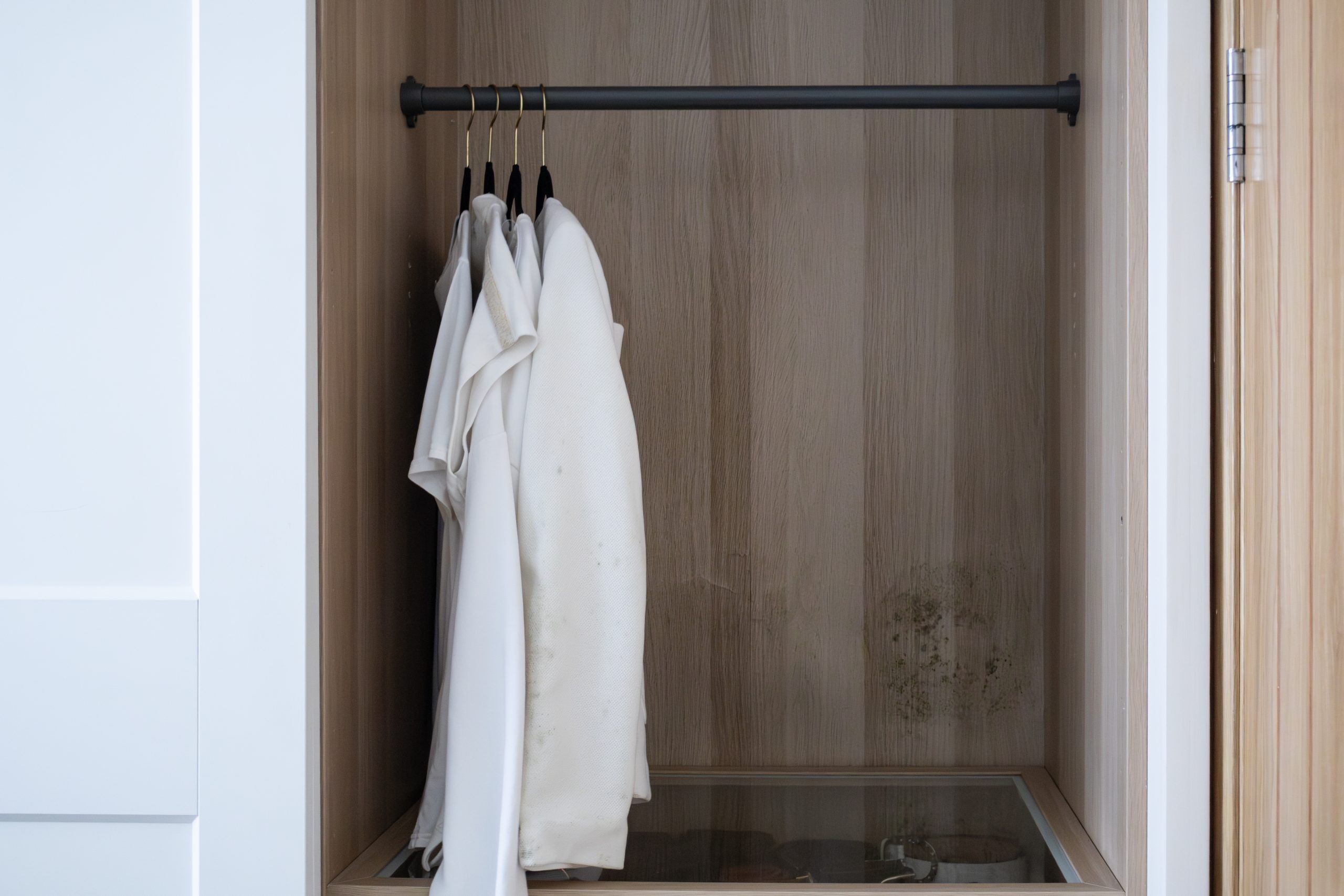
White, green, or fuzzy-looking spots may indicate mold on clothes in the closet or on other belongings. These items can retain moisture, particularly when they’re packed closely together without adequate airflow.
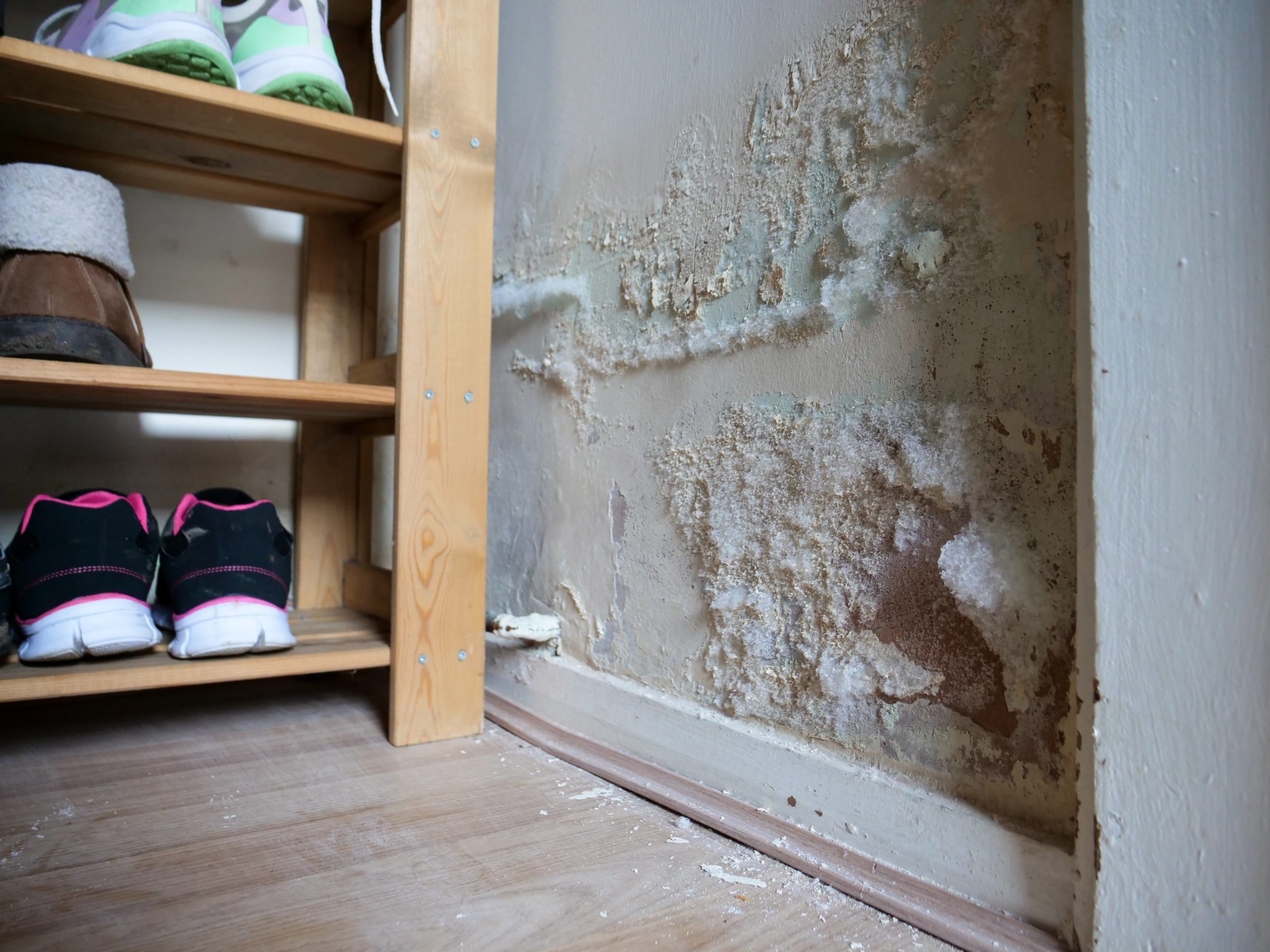
Stains on Walls, Baseboards, or Shelving
Don’t limit your inspection to clothing. Look at walls, shelving, corners, and baseboards as well.
Discoloration, peeling paint, staining, or swollen materials can point to a moisture issue affecting the closet itself. These warning signs are particularly important when they appear alongside a recurring odor.
What You Can Safely Handle Yourself
A small amount of visible surface mold may sometimes be manageable at home. However, cleaning should always be paired with moisture control. Otherwise, removing what you can see may only provide a temporary solution.
Cleaning Affected Clothing and Accessories
Start by removing affected belongings so you can inspect the closet and the items separately. Wash washable clothing according to the manufacturer’s care instructions and allow everything to dry completely before putting it back.
Some porous belongings that remain moldy, damaged, or cannot be thoroughly cleaned and dried may need to be discarded.
Also avoid returning damp shoes, towels, jackets, or other items to the closet. Introducing moisture back into an enclosed space can recreate the same conditions you’re trying to eliminate.
Lowering Humidity Inside the Closet
Understanding how to get rid of mold in a closet requires looking beyond the visible growth. You also need to address why moisture accumulated there in the first place.
Air conditioning, improved circulation, and a dehumidifier can help control indoor humidity. Giving stored belongings more breathing room can also improve airflow and help prevent mold growth.
When Closet Mold Signals a Bigger Problem
Sometimes, the closet is only where the symptoms become noticeable. If you clean the affected area but the odor, staining, or visible mold keeps returning, there may be an unresolved moisture source nearby.
Mold Behind the Drywall
Plumbing leaks, HVAC condensation, roof intrusion, or other moisture problems can affect drywall and insulation without creating an obvious puddle.
Persistent odors, soft drywall, staining, peeling finishes, or recurring growth can indicate that moisture has reached materials beyond the closet’s visible surfaces.
Recurring Growth After Cleaning
If mold returns shortly after cleaning, repeatedly wiping the surface is unlikely to solve the underlying problem.
When growth is extensive, continues returning, or appears connected to hidden moisture, professional mold remediation in Orlando can help identify affected areas and determine what needs to be addressed rather than focusing only on the visible mold.
How to Prevent Mold in Closets Year-Round
Once the closet is clean and dry, the next priority is keeping conditions from becoming favorable for mold again. In Orlando’s humid climate, prevention is an ongoing part of moisture management.
Ventilation and Storage Habits
To prevent mold in a closet, avoid packing belongings so tightly that air cannot circulate. Clothing should have some space between pieces, and stored items should not be pressed against walls where condensation or moisture could develop.
A few simple habits can make a difference:
- Open closet doors periodically to improve air circulation.
- Never store damp clothing, towels, shoes, or other belongings.
- Leave some space between stored items and walls.
- Avoid placing cardboard boxes directly against potentially damp surfaces.
- Inspect walls and baseboards periodically for staining or condensation.
- Address plumbing, roof, or HVAC leaks promptly.
These steps improve ventilation and make it easier to notice moisture problems before they create an environment where mold can spread.
Dehumidifiers and Moisture Absorbers
If a closet regularly feels humid, a dehumidifier can help remove excess moisture from the air. A humidity meter can also make it easier to monitor conditions rather than waiting for odors or visible growth to appear.
Moisture absorbers can be useful in smaller spaces, but they shouldn’t be treated as a solution for an active leak or persistent condensation. To effectively prevent mold growth, the underlying source of excess moisture still needs to be corrected.
Get Your Closet and Home Mold-Free
A little mold on clothes in a closet or a persistent odor may be the first indication that moisture is collecting somewhere it shouldn’t.
If you’ve cleaned the space and the musty smell keeps returning, visible mold continues developing, or you suspect moisture behind the walls, finding the source matters just as much as removing what you can see.
At Mold Remediation of Orlando, we help Central Florida homeowners identify mold and moisture problems and determine the appropriate next steps. Addressing the source early can help keep a small closet issue from becoming a larger problem elsewhere in your home.
If your closet is showing signs of recurring mold or hidden moisture, contact us to get professional help and take the next step toward a cleaner, drier home.
